
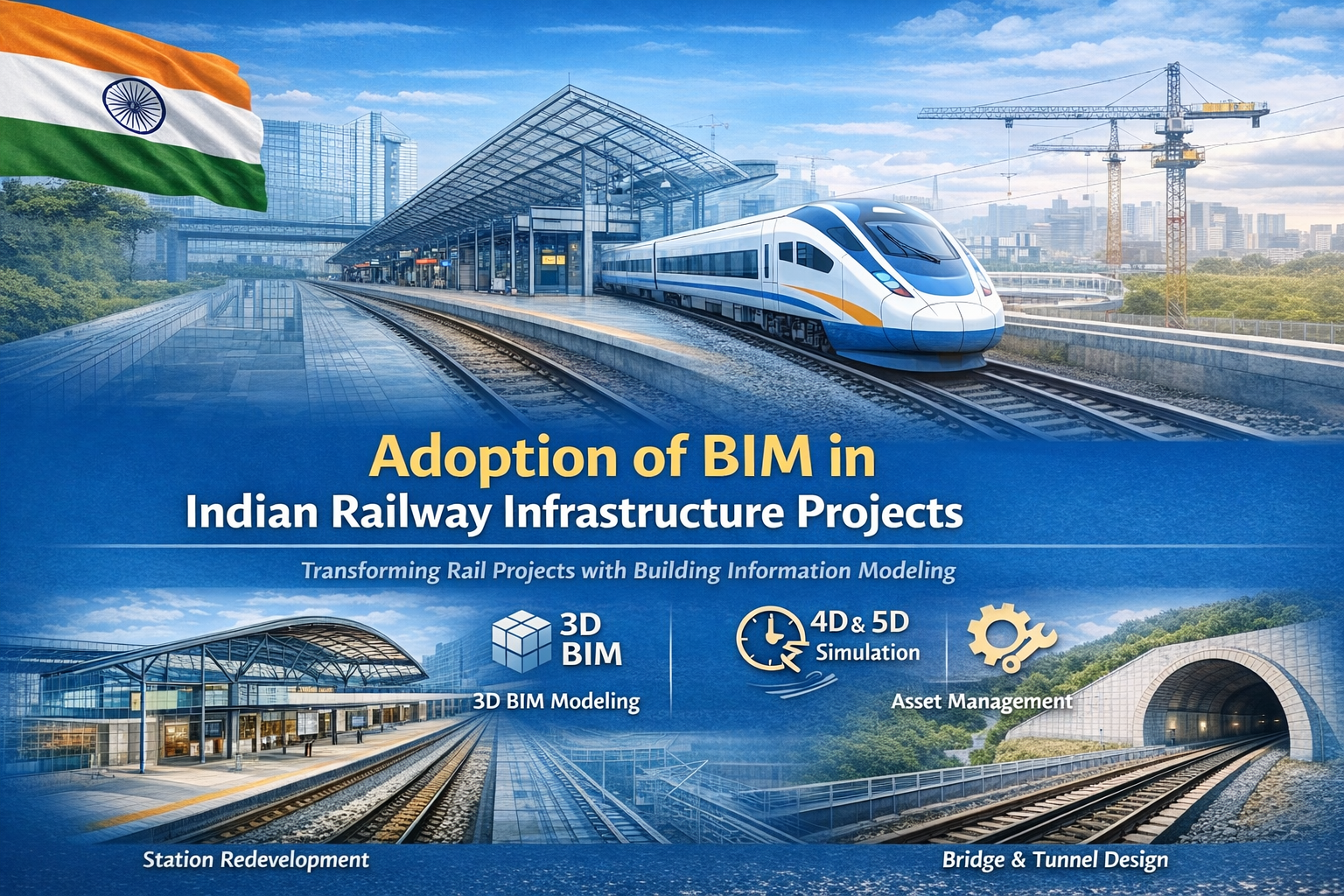
Adoption of BIM in Indian Railway Infrastructure Projects
Introduction
India’s railway network is one of the largest and most complex in the world, carrying millions of passengers and vast freight volumes daily. As the country pushes toward modernization - high-speed corridors, station redevelopment, dedicated freight corridors - the need for smarter, more efficient project delivery has become unavoidable.
This is where Building Information Modeling (BIM) is transforming the landscape.
BIM is not just a 3D modeling tool - it is a data-driven process that integrates design, construction, and operations into a single digital workflow. In the context of Indian Railways, BIM is emerging as a key enabler for cost control, clash-free design, faster execution, and lifecycle management.
Why BIM is Critical for Indian Railway Projects
Railway infrastructure projects in India involve multiple disciplines - civil, structural, track, signaling, electrical, and MEP systems. Traditionally, these are handled in silos, leading to:
- Design clashes
- Delays in approvals
- Cost overruns
- Rework during construction
With BIM, all stakeholders collaborate on a centralized digital model, enabling:
- Clash detection before construction
- Accurate quantity take-offs
- Improved coordination across disciplines
- 4D (time) and 5D (cost) simulation
For large-scale railway projects like stations, metro systems, and freight corridors, BIM significantly reduces risk and improves delivery timelines.
BIM Use Cases in Indian Railways
1. Station Redevelopment Projects
Modern railway stations are becoming multi-functional hubs with commercial spaces, smart facilities, and complex MEP systems. BIM helps in:
Coordinating architectural, structural, and MEP designs
- Visualizing passenger flow and space utilization
- Ensuring efficient construction sequencing
2. Track and Corridor Development
For projects like Dedicated Freight Corridors (DFC):
BIM supports alignment design and terrain modeling
- Integration with GIS improves planning accuracy
- Reduces land acquisition conflicts
3. Bridges and Tunnels
Railway bridges and tunnels require high precision. BIM enables:
Parametric modeling for complex geometries
- Structural analysis integration
- Reduced construction errors
4. Asset Management & Maintenance
Post-construction, BIM models can be used for:
- Maintenance scheduling
- Asset tracking
- Lifecycle cost optimization
Role of BIM Service Providers in India
The adoption of BIM in Indian Railways is accelerating, but it requires expertise, standardization, and execution capability. This is where companies like Tathastu BIM Pvt Ltd play a significant role.
Key Contributions:
-
LOD 300–500 BIM Modeling for railway infrastructure
-
Multi-disciplinary coordination (Architecture, Structure, MEP)
-
Clash detection and resolution using tools like Navisworks
-
Scan-to-BIM services for existing railway assets
-
4D/5D BIM for project planning and cost control
With growing demand in India, BIM service providers are bridging the gap between traditional engineering practices and digital construction workflows.
BIM Keywords Driving the Indian Market
To understand the current trend, here are important BIM-related keywords shaping the industry in India:
- BIM for Indian Railways
- BIM modeling services India
- Railway BIM implementation
- LOD 500 BIM India
- Scan to BIM railway projects
- BIM coordination services
- 4D 5D BIM India
- Infrastructure BIM India
- Revit modeling for rail projects
- Digital construction India
These keywords reflect the shift toward digitization and data-driven infrastructure development.
Government Push and Future Outlook
The Indian government is actively promoting digital construction technologies under initiatives like:
- Smart Cities Mission
- Dedicated Freight Corridors
- High-Speed Rail (Bullet Train Projects)
- Station Redevelopment Programs
Although BIM is not yet mandatory across all railway projects, its adoption is steadily increasing, especially in:
- EPC contracts
- Large-scale infrastructure tenders
- International collaborations
In the coming years, BIM is expected to become a standard requirement in Indian railway projects, similar to global practices.
Challenges in BIM Adoption
Despite its advantages, BIM adoption in Indian Railways faces some challenges:
- Lack of standardized BIM protocols
- Skilled workforce shortage
- Resistance to change from traditional workflows
- Initial investment in software and training
However, with increasing awareness and proven ROI, these barriers are gradually being overcome.
Conclusion
The adoption of BIM in Indian Railway Infrastructure Projects marks a significant step toward modern, efficient, and sustainable development.
By enabling better coordination, reducing errors, and improving project timelines, BIM is reshaping how railway infrastructure is designed, constructed, and managed in India.
Companies like Tathastu BIM Pvt Ltd are at the forefront of this transformation, delivering high-quality BIM solutions tailored to the complex needs of railway projects.
As India continues to expand and upgrade its railway network, BIM will not just be an advantage-it will become a necessity.
Popular Posts
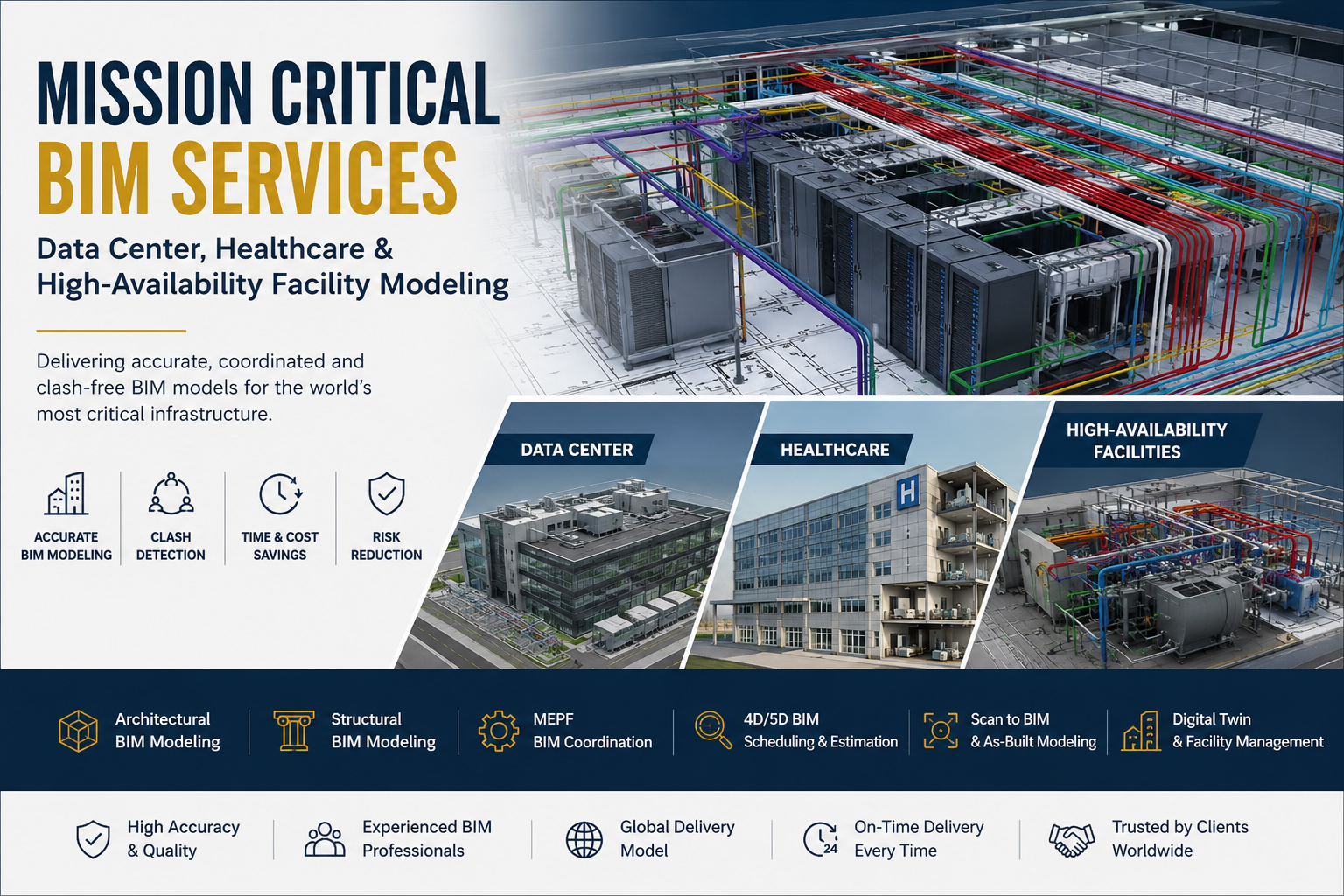
Mission Critical BIM Services: Data Center, Healthcare & High-Availability Facility Modeling

Data Center BIM Modeling Services in the USA | Architectural, Structural & MEPF BIM Solutions
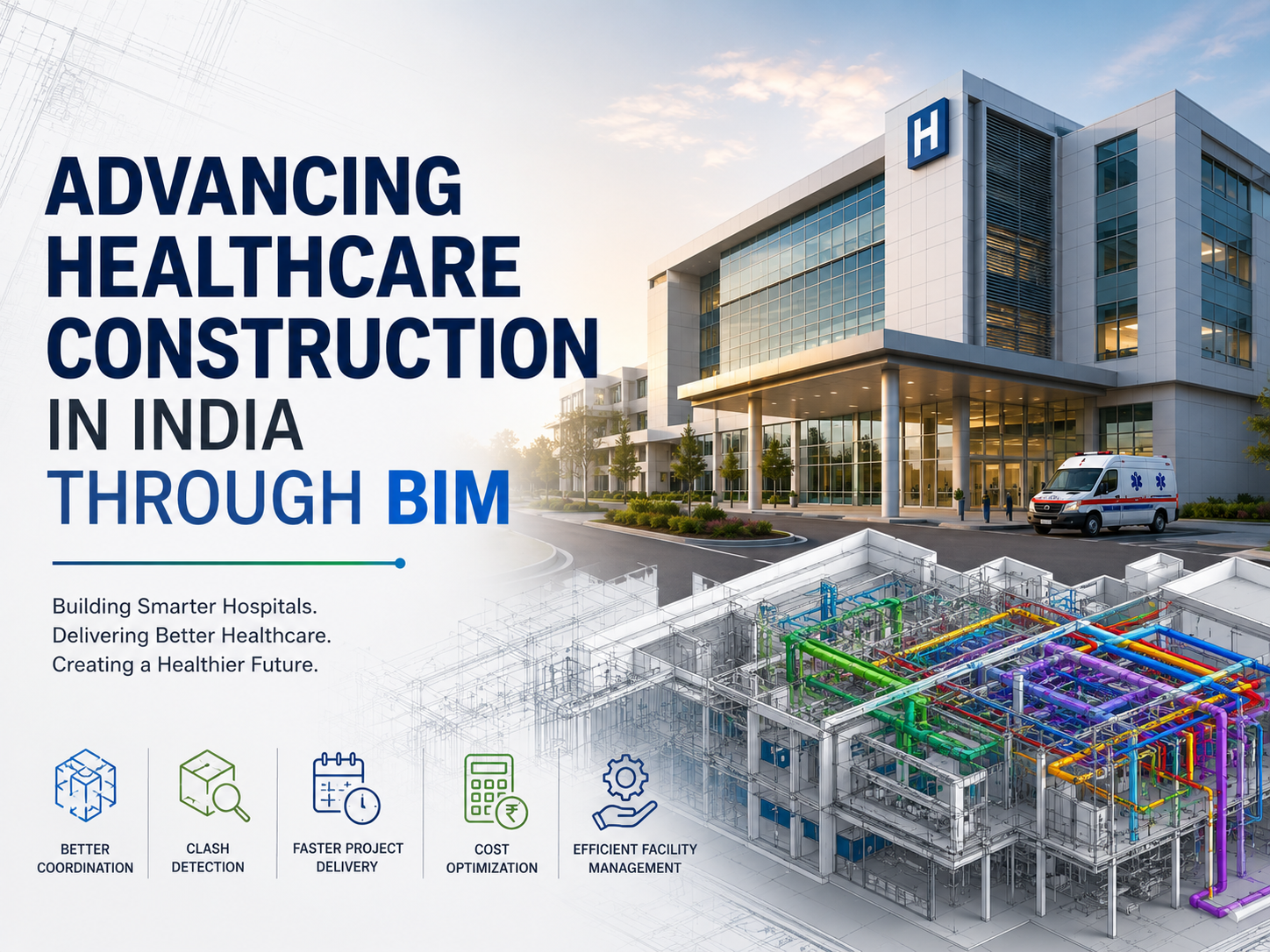
Advancing Healthcare Construction in India Through BIM

AI Impact Summit: A Turning Point for India’s BIM & Construction Tech Industry

India - US Trade Deal: A Game Changer for India’s BIM & AEC Industry