
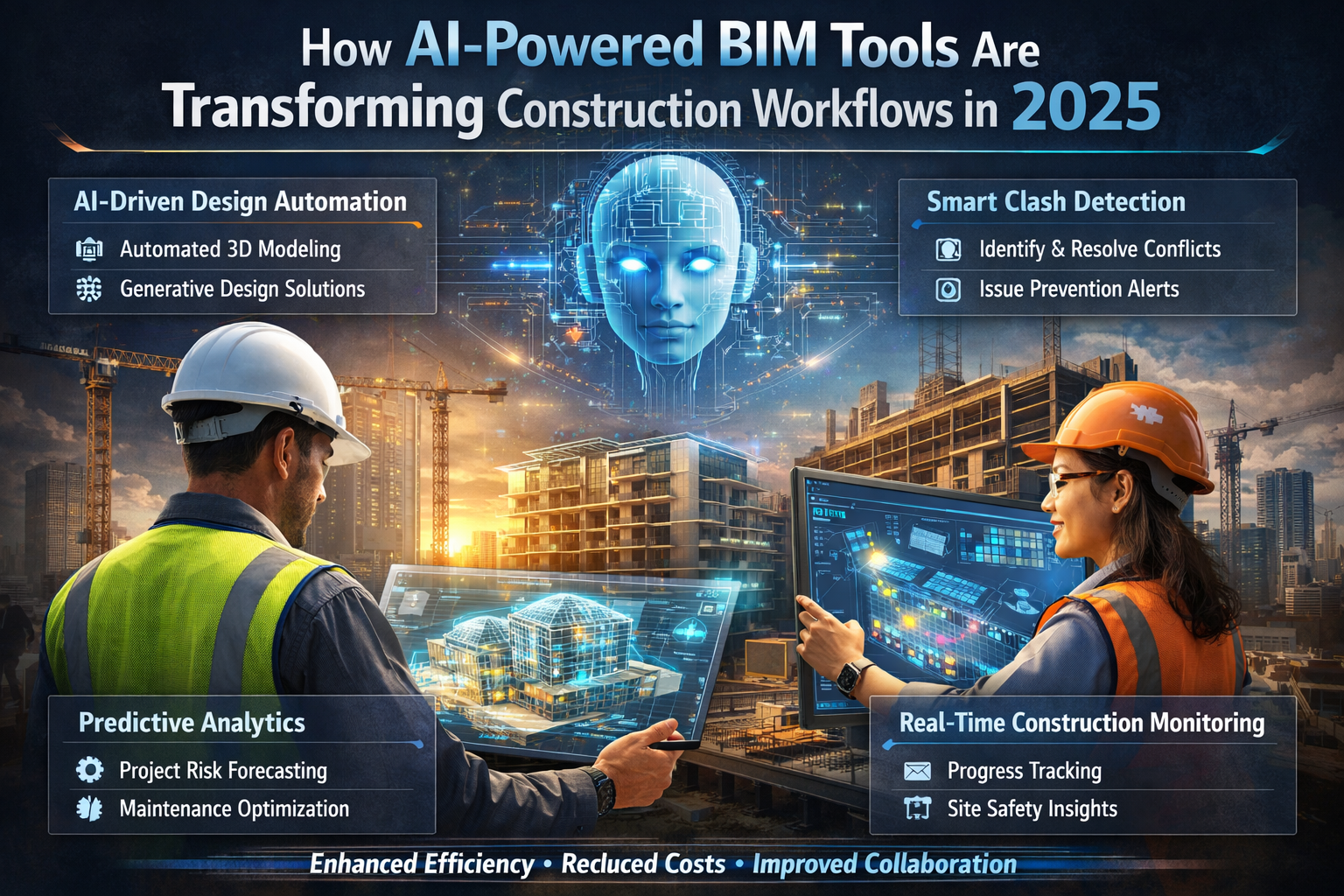
How AI-Powered BIM Tools Are Transforming Construction Workflows in 2025
Introduction — a new era for BIM
BIM used to mean a shared 3D model and a standard way to exchange geometry and metadata. In 2025, BIM has evolved into a dynamic, AI-enabled decision platform that helps teams predict problems, generate design options, automate repetitive tasks, and connect design to operation through digital twins. The result: shorter delivery cycles, fewer on-site surprises, improved sustainability outcomes, and measurable lifecycle savings. As a specialist BIM company, Tathastu BIM Pvt Ltd has seen these changes across projects and regions — from fast-moving private developments in the USA to complex infrastructure in Germany and Europe.
Below we unpack how AI is reshaping core BIM workflows — clash detection, modeling, analytics — and what owners, contractors and consultants should do to capture the value. (Where relevant, we point to industry research and vendor trends to back the claims.) Archdesk+2NovaTR+2
1. Smarter clash detection: from noisy lists to prioritized action
The old pain
Clash detection historically produced long, unprioritized lists that consumed coordination hours. Teams spent days triaging false positives and low-impact clashes while critical issues slipped into construction.
What AI changes
AI models now analyze geometry, metadata, historical fixes and project rules to classify and prioritize clashes. Instead of presenting 1,000 unranked clashes, an AI-driven workflow identifies the 10–20% of clashes most likely to cause schedule delays or rework and suggests remediation actions (move, resize, or reassign). This approach reduces coordination meeting time and focuses technical resources where they matter most. Archdesk
Practical impact
-
Faster decision cycles: teams resolve critical clashes during preconstruction rather than on site.
-
Reduced RFIs and change orders: fewer surprises downstream.
-
Better handoffs: issue assignment and remediation steps are automated and tracked in BIM collaboration platforms.
2. AI-assisted modeling and generative design: speed + performance
From manual drafting to computational creativity
AI and generative design now live inside mainstream BIM workflows. Designers supply constraints — program, site envelope, daylight targets, cost caps — and AI explores thousands of alternatives, returning optimized layouts and structural concepts that meet multidisciplinary performance goals. This capability brings computational exploration into the earliest phases of design, not just as a research curiosity. NovaTR
Automation for routine work
AI also automates repetitive modeling tasks: converting noisy point clouds into classified elements, auto-routing standard MEP runs to code/rule sets, and generating as-built model updates from drone or scan data. Automating these tasks frees engineers to focus on decisions that require expertise rather than manual drafting.
Why it matters
-
Better early decisions: performance tradeoffs are visible sooner, improving sustainability and cost outcomes.
-
Faster delivery: fewer manual rework hours and accelerated detailing.
-
Competitive edge: projects that evaluate more alternatives commonly achieve better value for owners.
3. Analytics & predictive insights — turning BIM data into foresight
The next frontier: prescription, not just description
BIM has always been a data repository; AI turns that repository into foresight. By ingesting schedule, procurement, sensor and model data, AI forecasts schedule slippage, resource conflicts, and high-risk procurement items before they become problems. Teams can run “what if” scenarios faster and quantify the cost or carbon impact of alternative decisions. Autodesk+1
Example use cases
-
Schedule risk scoring: AI flags tasks likely to be delayed because of upstream clashes or long-lead items.
-
Constructability scoring: historical project data helps predict where a new design will face installation challenges.
-
Operational forecasting: digital twins powered by AI predict maintenance needs and energy performance post-handover. Matterport
4. Digital twins: closing the loop from design to operations
Digital twins are no longer aspirational: integrated AI + BIM pipelines now create operational models that sync with sensors and facility systems. AI analyzes live data against the BIM-based twin to forecast failures, optimize HVAC schedules, and reduce energy consumption. This lifecycle perspective makes BIM a value generator long after construction is complete. ScienceDirect+1
Owner benefit: reduced lifecycle costs, fewer emergency repairs, and data-driven capital planning.
5. Cloud, collaboration and conversational BIM
AI features are increasingly cloud-native. Continuous model validation (clash checks, code checks, compliance) runs in the background while teams work, and natural language interfaces let stakeholders query models (“show me critical clashes this week”) and get action lists. These capabilities reduce meeting load and improve transparency across distributed teams. Autodesk
6. Who’s leading BIM innovation — and where to look
If you’re searching for the best BIM company in the USA, Germany, or Europe, or trying to identify the top BIM company in Germany, know that the market includes large platform vendors and specialist consultancies. Major global platforms (Autodesk, Bentley, Trimble and Nemetschek family companies) provide the foundational tools and cloud infrastructure; meanwhile, specialist BIM companies and consultancies deliver tailored AI integrations, digital twin services and project-level implementation. Industry market surveys list these names among leading providers in Europe and worldwide. Mordor Intelligence+1
If your brief asks for a BIM company in Germany that understands local standards, look for firms with local delivery teams and digital twin case studies. Lists of top 10 BIM companies in Europe evolve quickly, but reputable market reports and regional directories are good starting points when shortlisting partners. ensun+1
7. Implementation challenges — what firms must plan for
AI in BIM is powerful, but results depend on more than technology:
-
Data hygiene: clean naming, standardized attributes, and consistent as-built data are prerequisites. AI models perform poorly with inconsistent input.
-
Interoperability: multiple formats and vendor ecosystems still create friction; strong exchange standards (IFC, BCF) and governance are essential.
-
Explainability & trust: teams must understand why AI suggests a fix and retain human oversight for critical decisions.
-
Skills & change management: training and role redesign (e.g., BIM+AI coordinators) are needed to capture value.
-
Governance: define when AI outputs are advisory vs. actioned, and keep traceable audit trails for decisions.
8. A practical adoption roadmap (Tathastu’s approach)
Tathastu BIM Pvt Ltd recommends a staged, metrics-driven adoption approach:
Phase A — Data readiness (0–6 weeks)
-
Audit model quality and metadata.
-
Standardize naming and classification rules.
-
Set benchmarks for key metrics (coordination hours, RFIs, change order rates).
Phase B — Pilot use case (6–16 weeks)
-
Pick one high-impact use case: clash triage, point cloud conversion, or predictive schedule analysis.
-
Run a pilot with clear KPIs (e.g., reduce coordination time by X%, cut RFIs by Y%).
Phase C — Scale & integrate (4–8 months)
-
Integrate successful pilots into cloud workflows and link to procurement and schedule systems.
-
Establish training programs for engineers and managers.
Phase D — Lifecycle & twin (moving forward)
-
Connect the as-built BIM to FM systems and roll out predictive maintenance via digital twin analytics.
Tathastu’s pilots typically focus on measurable wins (time saved, risk reduced) to build internal buy-in before broad rollout.
9. Why regional choice matters: USA, Germany and Europe
-
USA: large-scale private projects and mature cloud ecosystems mean strong demand for scaleable AI + BIM solutions — ideal when you need platform integration and global vendor support. NovaTR+1
-
Germany: strict standards, strong engineering culture and early infrastructure digitization mean German projects reward partners who understand local regulations, ISO 19650 adoption, and integration with industrial workflows — search for a BIM company in Germany with local delivery and compliance expertise. ensun
-
Europe: diversity across markets means a partner that demonstrates cross-border projects and multi-language delivery will perform well; look to lists of top BIM companies in Europe to shortlist vendors with the scale and regional experience you need. Mordor Intelligence
10. Case snapshot — what success looks like
A medium-sized hospital project we supported used AI-driven clash triage and automated MEP routing. Results in the pilot phase:
-
45% reduction in coordination meeting hours.
-
32% fewer on-site RFIs during first 6 months of construction.
-
Faster handover model ready for FM, enabling earlier start of energy optimization routines.
These outcomes demonstrate that conservative, measurable pilots deliver real ROI and prepare assets for long-term digital twin value.
Conclusion — AI is amplifying what BIM can do
In 2025 AI has moved from augmentation to co-pilot for BIM workflows. The biggest gains come not from flashy demos but from steady reductions in avoidable rework, smarter early design choices, and the lifecycle benefits of digital twins. Whether you’re searching for the best BIM company in the USA, Germany, or Europe, or you need a local BIM company in Germany that understands compliance and operations, pick a partner who combines domain expertise with a clear, measurable adoption roadmap.
Tathastu BIM Pvt Ltd helps owners, contractors and consultants pilot AI-BIM use cases, standardize data, and scale digital twin outcomes. If you want, we can prepare a tailored 90-day pilot plan focused on clash triage or predictive schedule risk for your next project.
Popular Posts
Mission Critical BIM Services: Data Center, Healthcare & High-Availability Facility Modeling
Data Center BIM Modeling Services in the USA | Architectural, Structural & MEPF BIM Solutions
Advancing Healthcare Construction in India Through BIM
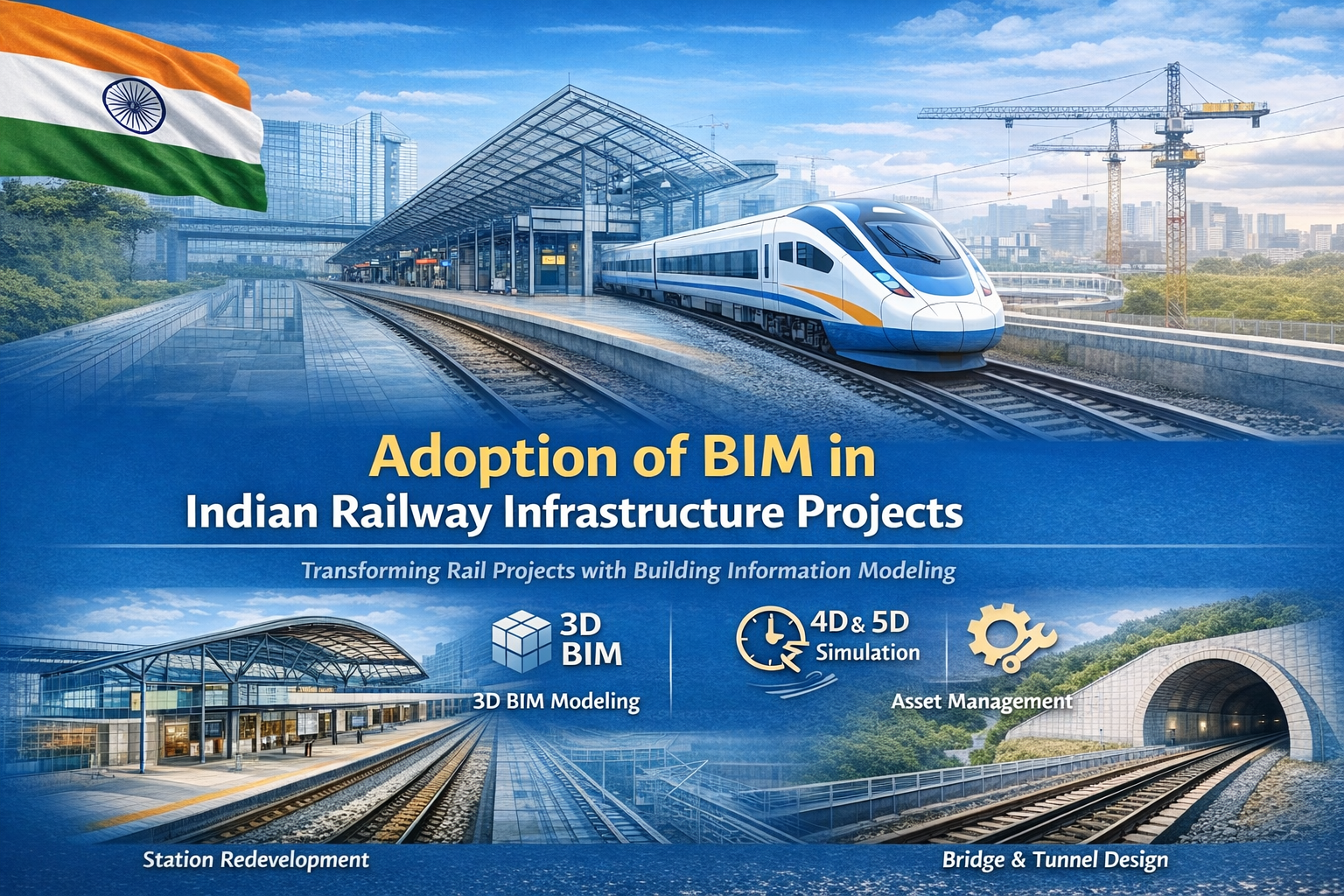
Adoption of BIM in Indian Railway Infrastructure Projects

AI Impact Summit: A Turning Point for India’s BIM & Construction Tech Industry